
Where to next in Dysphagia affecting 590 million people worldwide?
Dysphagia Awareness Month 2026: Expanding the Conversation Beyond Aspiration to Functional Living and Assistive Technology
Dr Gabriel Roux
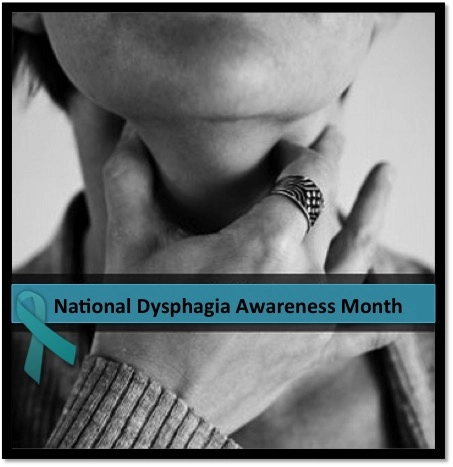
June is officially recognized as National Dysphagia Awareness Month in the United States, an initiative supported by organizations including the Dysphagia Research Society and the American Speech-Language-Hearing Association (ASHA). Each year, Dysphagia Awareness Month provides an important opportunity to increase public and professional understanding of swallowing disorders and their impact on health, safety, and quality of life.
For healthcare professionals working across neurology, rehabilitation, geriatrics, primary care, home health, and speech-language pathology, dysphagia remains one of the most clinically significant and functionally impactful conditions affecting patients worldwide.
Yet despite growing awareness efforts, much of the conversation surrounding dysphagia continues to focus primarily on aspiration risk, pneumonia prevention, and dietary modification. While these remain essential clinical priorities, dysphagia management extends far beyond aspiration alone.
For many patients, the daily burden of dysphagia is experienced through reduced hydration, inadequate nutrition, prolonged mealtimes, caregiver dependence, social withdrawal, medication administration challenges, reduced participation in family meals, and declining quality of life. ASHA identifies dehydration, malnutrition, caregiver burden, social isolation, and reduced enjoyment of eating and drinking among the significant consequences associated with dysphagia.
As our understanding of dysphagia continues to evolve, so too must our approach to management.
A Global Health Challenge
Although June is recognized as Dysphagia Awareness Month in the United States, swallowing disorders are not confined by geography.
Dysphagia affects individuals living with Parkinson's disease, stroke, dementia, ALS, head and neck cancer, frailty, autoimmune disorders, rare diseases, and medically complex aging conditions across every healthcare system worldwide. The challenges associated with maintaining hydration, nutrition, safety, and participation are shared by patients and caregivers regardless of whether they reside in North America, Europe, Asia, Australia, or the United Kingdom.
For clinicians working internationally, the goals are remarkably consistent:
- Support safe and efficient swallowing
- Reduce preventable complications
- Maintain hydration and nutritional status
- Promote person autonomy
- Reduce caregiver burden
- Preserve quality of life
These objectives require more than clinical assessment alone. They require practical solutions that patients can successfully implement in daily life.
The Missing Piece: Assistive Technology in Dysphagia Care
One notable observation during many Dysphagia Awareness Month campaigns is the limited discussion surrounding assistive technology.
Healthcare professionals routinely leverage adaptive equipment to support mobility, communication, vision, hearing, and activities of daily living. Yet adaptive intake technology remains relatively underrepresented within broader dysphagia conversations.
This gap deserves attention.
While compensatory swallowing strategies and therapeutic interventions remain foundational components of care, many patients continue to struggle with the practical realities of drinking and eating safely outside the clinical environment.
Common barriers include:
- Reduced oral motor control
- Tremor
- Weakness
- Fatigue
- Poor self-feeding access
- Difficulty managing cup flow
- Excessive head extension during drinking
- Caregiver dependence for hydration
These challenges often contribute to reduced adherence, inadequate fluid intake, frustration, and diminished confidence during meals. As healthcare increasingly embraces person-centered and participation-focused care models, assistive technologies deserve consideration as part of the broader dysphagia management continuum.
Reframing Success in Dysphagia Management
Historically, success in dysphagia care has often been measured by physiologic outcomes such as aspiration reduction. Today, clinicians are increasingly recognizing additional outcomes that matter deeply to patients and families:
- Hydration maintenance
- Nutritional access
- Meal participation
- Self-feeding independence
- Caregiver efficiency
- Social engagement
- Confidence during meals
- Long-term quality of life
For many individuals living with progressive neurological disease, these functional outcomes may ultimately have equal or greater impact on daily wellbeing than isolated physiologic measures.
The future of dysphagia care is not simply about helping patients swallow more safely. It is about helping patients continue to live more fully.
Supporting Functional Hydration Through Innovation
At Lifemere, we believe Dysphagia Awareness Month offers an opportunity to broaden the discussion around practical, real-world solutions that support patients beyond the therapy room. The Lifemere RoseCup® System was developed to address a commonly overlooked challenge in dysphagia management: maintaining safe, efficient, and accessible hydration.
Designed to provide greater flow control, reduce excessive head tilt, support drinking stability, and support more controlled fluid intake, the RoseCup serves as an adaptive intake solution for individuals experiencing swallowing difficulties associated with neurological disease, aging, weakness, tremor, fatigue, and other medically complex conditions.
Rather than replacing clinical care, adaptive intake technologies function as supportive tools that help patients carry therapeutic recommendations into everyday life. For clinicians seeking person-centered approaches to hydration support, these technologies represent an important and evolving component of comprehensive dysphagia management.
Moving Forward Together
This Dysphagia Awareness Month, we stand alongside Speech-Language Pathologists, neurologists, physicians, nurses, rehabilitation professionals, caregivers, and patients around the world in raising awareness of swallowing disorders and their profound impact on daily life.
At the same time, we encourage the healthcare community to expand the conversation.
Beyond aspiration.
Beyond diet modification.
Beyond impairment alone.
Toward hydration, participation, independence, dignity, and the practical technologies that help make those goals achievable.
Because dysphagia is a global challenge, and improving quality of life for those living with dysphagia requires global solutions.
Jessica Ackerman, MS,CCC-SLP, is a Speech-Language Pathologist and dysphagia specialist with more than 25 years of experience in swallowing disorders, neurological rehabilitation, digital health, and healthcare innovation. As a clinical consultant to Lifemere, she is passionate about advancing person-centered dysphagia care through education, innovation, and practical solutions that support hydration, participation, independence, and quality of life.
The science of texture-modified foods and thickened
liquids has reached a point of excellence under the
leadership of the IDDSI (International Dysphagia Diet
Standardisation Initiative). The considerable efficiency
gap that remains in managing Dysphagia
lies in intake devices.
More than 10 companies worldwide manufacture intake
devices, but in some care sectors, more than 90% of
patients still use spoons and open cups!
Professionals and carers need education and training,
and the industry needs guidelines, research, and
stimulation to improve the design of intake devices.

Congratulations to the IDDSI launching for the first time in
Europe with its inaugural congress in Florence, Italy, on
February 27-28, 2025. It represents a significant milestone
in enhancing the quality of care for individuals with
swallowing difficulties in Europe.

Dr Gabriel Roux will represent Lifemere in Florencе.
Contact: gawie@lifemere.com or phone: +61 428 406 684

Frequently Asked Questions

-- / 5 average rating from -- reviews
We'd love to hear your thoughts!
Lorem ipsum dolor sit amet, consectetur adipiscing elit. Suspendisse varius enim in eros elementum tristique. Duis cursus, mi quis viverra ornare, eros dolor interdum nulla, ut commodo diam libero vitae erat. Aenean faucibus nibh et justo cursus id rutrum lorem imperdiet. Nunc ut sem vitae risus tristique posuere.
We'd love to hear your thoughts!
-- / 5 average rating from -- reviews
Lorem ipsum dolor sit amet, consectetur adipiscing elit. Suspendisse varius enim in eros elementum tristique. Duis cursus, mi quis viverra ornare, eros dolor interdum nulla, ut commodo diam libero vitae erat. Aenean faucibus nibh et justo cursus id rutrum lorem imperdiet. Nunc ut sem vitae risus tristique posuere. uis cursus, mi quis viverra ornare, eros dolor interdum nulla, ut commodo diam libero vitae era